


Table of Contents
- What Are Prebiotics in Skincare?
- Signs of a Damaged Skin Barrier and How Prebiotics Help
- Is Prebiotic Serum Good for Sensitive Skin?
- Best Dermatologist Approved Serums 2026: What to Look For
- How to Build a Microbiome-Friendly Skincare Routine
- Step-by-Step Guide to Using Prebiotic Serum Safely
- Frequently Asked Questions
Last Updated: September 27, 2026
What Are Prebiotics in Skincare?
Prebiotics are ingredients that feed and support the good bacteria living on your skin. Think of them as food for your skin's protective microbiome. Your skin hosts trillions of beneficial microorganisms that keep it healthy, balanced, and resilient. Prebiotics work by nourishing these good bacteria, which in turn strengthen your skin's natural defenses.
The skin microbiome functions like an ecosystem. When it's balanced, your skin barrier stays strong and inflammation stays low. When it's disrupted, sensitivity, redness, and dryness follow. Prebiotics help restore that balance by creating an environment where protective bacteria thrive.
Unlike probiotics (which are live bacteria themselves), prebiotics are non-living compounds that act as fuel. Common prebiotic ingredients include inulin, rhamnose, and fermented lysates. They're gentle enough for reactive skin because they don't introduce new organisms, they simply support the ones already there.
Signs of a Damaged Skin Barrier and How Prebiotics Help
A compromised skin barrier shows up as persistent dryness, tightness, redness, and heightened sensitivity to products you've used before without issue. Your skin may feel uncomfortable even after moisturizing. Irritation appears quickly and takes longer to fade.
How Prebiotics Strengthen Your Barrier
Prebiotics support barrier function by maintaining a healthy skin flora balance. A balanced microbiome produces compounds that reinforce your skin's lipid barrier, the protective layer that locks in moisture and keeps irritants out. When good bacteria are thriving, they produce metabolites that reduce inflammation and support skin homeostasis.
The skin barrier relies on lipids, proteins, and microorganisms working together. Prebiotics help each component function optimally. They reduce transepidermal water loss (the amount of moisture your skin loses to the air), which is why prebiotic serums often feel hydrating without being heavy.
Research shows that supporting skin flora diversity strengthens barrier function over time. This is why consistent use matters more than immediate results. Your microbiome needs time to rebalance and stabilize.
Is Prebiotic Serum Good for Sensitive Skin?
Yes, is prebiotic serum good for sensitive skin? Absolutely, it's excellent because it addresses the root cause of sensitivity: an imbalanced microbiome. Rather than masking irritation with soothing ingredients alone, prebiotics rebuild the conditions that prevent sensitivity from developing in the first place.
Sensitive skin typically shows signs of dysbiosis, an imbalance in skin flora. Prebiotics restore diversity and balance without introducing harsh actives. This makes them safer than many other treatment options for reactive skin types.
Reducing Redness and Inflammation
Prebiotics calm inflammation by supporting bacteria that produce anti-inflammatory compounds. A balanced microbiome naturally reduces redness and creates a less reactive environment. This happens gradually as your skin flora stabilizes over weeks.
The soothing effect comes from supporting your skin's own calming mechanisms rather than applying external soothing agents.
Supporting Skin Microbiome Balance
The skin microbiome thrives on diversity. Prebiotics encourage beneficial bacteria to multiply and establish stable colonies. A diverse microbial community is more resilient and less prone to dysbiosis-driven sensitivity.
Prebiotic serums work best when combined with a microbiome-friendly routine. Harsh cleansers, fragrance, and unnecessary actives disrupt the balance you're building. Consistency matters, skipping application for several days can slow your progress.
Best Dermatologist Approved Serums 2026: What to Look For
When selecting a prebiotic serum for sensitive skin, prioritize these factors:
- Prebiotic concentration: Look for prebiotics listed in the first five ingredients
- Minimal fragrance: Fragrance is a common irritant for sensitive skin
- Hyaluronic acid inclusion: Supports hydration alongside prebiotic benefits
- Dermatologist testing: Choose brands that conduct clinical studies on their formulas
- Clean ingredient list: Avoid unnecessary additives that can trigger reactions
Coast to Coast Glow's Bioactive Prebiotics Jelly Serum ($24.99) delivers all these elements. It's formulated with prebiotics and hyaluronic acid in a lightweight gel base designed for all skin types, including sensitive and reactive skin. The transparent formulation means you know exactly what you're applying, no hidden irritants.

How to Build a Microbiome-Friendly Skincare Routine
A microbiome-friendly routine minimizes disruption while supporting your skin's natural bacteria. Start with a gentle cleanser that doesn't strip your skin. Avoid sulfates and harsh surfactants that kill beneficial bacteria indiscriminately.
Follow cleansing with your prebiotic serum. Apply a few drops to clean, dry skin and allow it to absorb. Then layer a lightweight moisturizer to seal in hydration. Keep your routine simple, more products mean more potential irritants.
Bioactive Prebiotics Jelly Serum →
Patch Testing Protocol for Reactive Skin
Before committing to any new serum, conduct a patch test over 24-48 hours. Apply a small amount to your inner arm or behind your ear. Watch for redness, itching, or burning. If no reaction occurs, introduce the serum to your face gradually.
Start with 2-3 applications per week for the first week. If your skin tolerates it well, increase to daily use. This gradual introduction lets your microbiome adjust without overwhelming your barrier.
Ingredient Interactions to Avoid
Certain combinations can disrupt the microbiome-friendly benefits you're building. Avoid mixing your prebiotic serum with:
- Vitamin C serums: Can lower skin pH and disrupt flora balance
- Retinoids: May be too irritating during microbiome rebalancing
- Acids (AHAs/BHAs): Strip beneficial bacteria along with dead skin
- Essential oils: Often irritating for sensitive skin
Use your prebiotic serum alone or mix it into your moisturizer for added hydration. Coast to Coast Glow's Microbiome Prebiotics Face Mist ($19.19) pairs perfectly with the serum for midday hydration without disrupting your barrier.

Step-by-Step Guide to Using Prebiotic Serum Safely
Preparation and Application
Begin with a clean face. Use lukewarm water and a gentle cleanser, skip hot water, which can irritate sensitive skin. Pat your skin dry completely. Damp skin dilutes your serum and reduces its effectiveness.
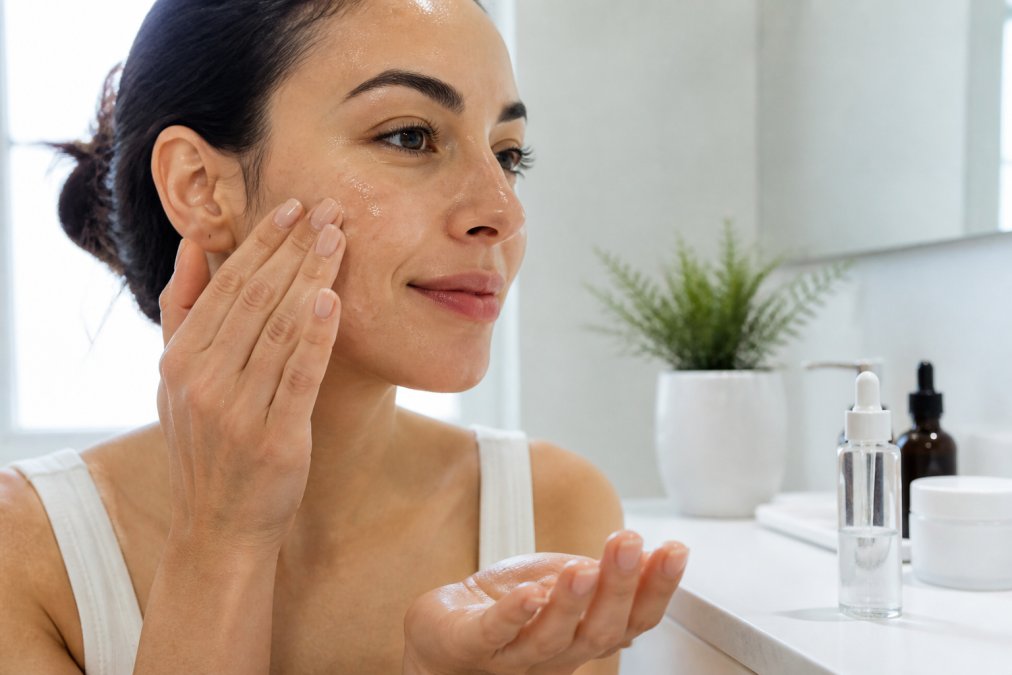
Apply 2-3 drops of prebiotic serum to your fingertips. Gently press it into your skin using your palms and fingertips, avoid rubbing or tugging. Let it absorb for 1-2 minutes before applying moisturizer. This gives the serum time to penetrate without being diluted.
Morning application: Use your prebiotic serum after cleansing but before sunscreen. Evening application: Apply after cleansing and before your night moisturizer. Consistency matters more than timing, choose a routine you'll stick with.
What to Expect: Short-Term vs. Long-Term Results
Short-term (first 2 weeks): Your skin may feel more hydrated and slightly calmer. Some people notice less tightness or dryness. Don't expect dramatic changes yet, your microbiome is still rebalancing.
Medium-term (4-6 weeks): Redness typically begins fading. Sensitivity to other products decreases. Your skin feels more resilient and less reactive to minor irritants.
Long-term (8-12 weeks): Barrier function strengthens significantly. Inflammation reduces noticeably. Your skin maintains hydration better and recovers faster from irritation.
Patience is essential. Skin barrier repair takes time, there's no shortcut. Consistent daily use delivers better results than sporadic application. Most people see meaningful improvement by week 8.
| Timeline | Expected Changes | Skin Feel |
|---|---|---|
| Weeks 1-2 | Increased hydration | Smoother, less tight |
| Weeks 3-6 | Reduced redness | More balanced, calmer |
| Weeks 7-12 | Strengthened barrier | Resilient, less reactive |
| 3+ months | Sustained improvement | Stable, healthy |
If you've struggled with sensitive skin reactions and tried countless products without lasting relief, the issue often traces back to microbiome imbalance rather than individual ingredient sensitivities. Prebiotic serums address this root cause by rebuilding the bacterial balance your skin needs to heal. According to dermatological research on skin microbiome health, supporting your skin's natural flora is one of the most effective long-term approaches to managing sensitivity and strengthening barrier function.
Coast to Coast Glow's approach centers on this science. Our Bioactive Prebiotics Jelly Serum combines prebiotics with hyaluronic acid in a clean, transparent formula designed specifically for sensitive and reactive skin. Paired with the Microbiome Prebiotics Face Mist, you have a complete system that supports your skin's microbiome while delivering visible hydration and calm. Start with the serum as your foundation, then add the mist for midday refreshment. Both products are dermatologist-approved and formulated without fragrance or unnecessary additives.
Frequently Asked Questions
Is prebiotic serum safe for reactive and sensitive skin?
Yes, prebiotic serum is designed to be safe for sensitive skin when chosen carefully. Prebiotics support your skin microbiome and strengthen the barrier without harsh ingredients. However, reactive skin requires a patch test first. Apply a small amount to your inner arm or behind your ear for 24-48 hours to check for irritation. If no reaction occurs, introduce the serum gradually into your routine, starting 2-3 times per week before daily use. Always choose formulas free from fragrance and unnecessary additives.
How long does it take to see results from prebiotic serum?
Short-term benefits appear within 1-2 weeks: skin feels calmer, hydration improves, and redness may decrease. Long-term results develop over 4-8 weeks as your skin microbiome rebalances and your barrier strengthens. Consistency matters more than speed. Using prebiotic serum daily, morning and evening, produces faster and more stable results than sporadic application. Patience is essential for sensitive skin, which heals gradually.
Can prebiotic serum help with rosacea-prone and inflamed skin?
Prebiotic serum supports inflamed skin by promoting good bacteria growth and reducing inflammatory responses. The skin microbiome plays a key role in rosacea triggers. By restoring microbial diversity and strengthening your skin barrier, prebiotics create an environment less prone to flare-ups. Results vary by individual. Pair prebiotic serum with calming agents like hyaluronic acid for best results on rosacea-prone skin.
What makes the Bioactive Prebiotics Jelly Serum different from other prebiotic products?
The Bioactive Prebiotics Jelly Serum is formulated specifically to balance and nourish sensitive skin while strengthening your skin barrier. Its lightweight, gel-based formula absorbs quickly without heaviness, making it suitable for all skin types. It combines prebiotics with hyaluronic acid to provide both microbiome support and deep hydration. It delivers clinical-grade results. The formula can be used alone or mixed into your moisturizer for added flexibility in your routine.