


Table of Contents
- What Makes Clean Ingredients Effective
- How to Read Skincare Ingredient Labels for Active Compounds
- 7 Toxic Ingredients to Avoid in Skincare Products
- Understanding Third-Party Certifications and Testing Standards
- Clean Beauty vs Clinical Skincare Efficacy: What the Research Shows
- Spotting Greenwashing and Marketing Hype
- Building a Results-Driven Clean Routine Without Breaking the Bank
- Frequently Asked Questions
Last Updated: September 23, 2026
What Makes Clean Ingredients Effective
Effective clean ingredients deliver measurable results while maintaining transparency and safety. Many products claim to be clean without addressing actual skin concerns like dryness, aging, or sensitivity.
At Coast to Coast Glow, we define clean ingredients as those formulated without synthetic fillers, harmful preservatives, or unnecessary additives, while maintaining clinical efficacy. An ingredient can be natural and still irritate sensitive skin; conversely, some synthetic ingredients deliver results that natural alternatives cannot match at comparable concentrations.

The most effective clean ingredients are backed by research, present in therapeutic concentrations, and paired with complementary actives that enhance absorption. Hyaluronic acid, niacinamide, lactic acid, and plant-derived prebiotics exemplify this balance. Efficacy is determined by chemistry and concentration, not origin.
Results-driven clean skincare requires honesty about ingredient capability. A product claiming to "reduce wrinkles" with only botanical extracts at trace levels is greenwashing; one using niacinamide at 4-5% concentration can deliver on its promise.
How to Read Skincare Ingredient Labels for Active Compounds
Ingredient lists are ordered by concentration, with the first five ingredients comprising roughly 80% of the formula. Understanding this hierarchy reveals whether a product delivers on its promises.
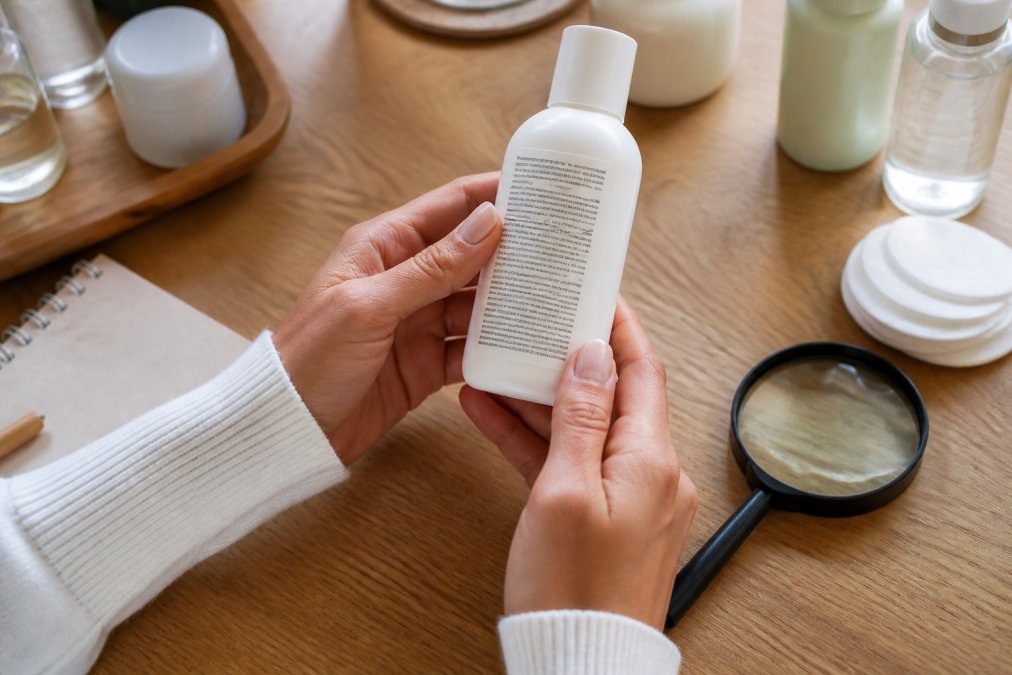
Active compounds address specific skin concerns and differ from humectants, emollients, and preservatives. Look for ingredients with established research: vitamin C, retinol, niacinamide, salicylic acid, lactic acid, peptides, and ceramides.
Concentration matters more than novelty. Hyaluronic acid in the first ten ingredients hydrates effectively; listed 20th, it contributes little. Botanical extracts often appear in amounts too small to provide benefit beyond fragrance or texture.
Ignore front-of-package marketing claims. Flip to the back, locate the ingredient list, and identify active compounds. Cross-reference unfamiliar ingredients with research databases to confirm meaningful concentrations.
7 Toxic Ingredients to Avoid in Skincare Products
Certain ingredients carry genuine safety concerns or are banned outright in some markets. Understanding which ones to avoid helps you make intentional choices rather than relying solely on marketing language.
Phthalates are plasticizers hidden under "fragrance" on labels and linked to endocrine disruption. Fragrance-free products eliminate this concern.
Parabens (methylparaben, propylparaben, butylparaben) accumulate in skin tissue. While regulatory bodies consider them safe, many consumers avoid them due to bioaccumulation concerns. Paraben-free alternatives work effectively.
Formaldehyde and formaldehyde releasers (like DMDM hydantoin and imidazolidinyl urea) are preservatives that break down into formaldehyde, a known carcinogen. Avoid products listing these compounds.
Synthetic fragrances hide dozens of undisclosed chemicals. For sensitive skin or transparency, choose fragrance-free products.
Petroleum-derived mineral oil clogs pores. Plant-based alternatives like jojoba oil or squalane offer similar emollient properties without occlusion.
Synthetic dyes like FD&C colorants trigger sensitivity in reactive skin. Natural pigments from iron oxides serve the same purpose.
Sulfates (sodium lauryl sulfate, sodium laureth sulfate) strip natural oils. Gentler surfactants like decyl glucoside cleanse without stripping.
The key distinction: some of these ingredients are genuinely harmful; others are simply controversial or unnecessary. Reading labels helps you align your choices with your values and skin's actual needs.
Understanding Third-Party Certifications and Testing Standards
Third-party certifications provide independent verification that a product meets specific safety or ingredient standards. They're not all equal, and understanding which ones matter helps you distinguish genuine clean beauty from marketing theater.
Dermatologist-tested requires minimal verification and doesn't specify what was tested. Dermatologist-approved suggests the product met specific benchmarks, though this varies by certifier.
Cruelty-free certification verifies no animal testing. Organizations like Leaping Bunny maintain strict standards and audit annually, making this certification reliable.
Hypoallergenic is largely unregulated. For sensitive skin, look for products tested on sensitive skin types rather than relying on this claim.
Clean beauty certifications vary widely. Some organizations (like Credo or The Detox Market) maintain strict standards; others apply looser criteria. Research the certifier before trusting their seal.
Third-party safety testing is more rigorous than marketing claims. Products tested for heavy metals, microplastics, or microbial contamination provide measurable assurance. If a brand publishes testing results publicly, that transparency signals confidence in the formula.
Clean Beauty vs Clinical Skincare Efficacy: What the Research Shows
The false binary between clean beauty and clinical efficacy creates confusion. Many clean formulas deliver clinical results; many clinical formulas contain unnecessary additives.
The real question is efficacy versus marketing. A clinically proven retinol serum that's also clean outperforms a clean product with no active compounds at meaningful concentrations.
Ingredient concentration, pH balance, and complementary actives determine results more than source. Niacinamide, hyaluronic acid, and lactic acid work equally well whether synthetic or natural.
Clinical formulas sometimes outperform clean alternatives in stability and delivery, but these advantages matter only when actives are present in therapeutic concentrations.
Coast to Coast Glow's approach bridges this divide.
Spotting Greenwashing and Marketing Hype
Greenwashing in skincare uses clean-sounding language to mask products that are neither clean nor effective. Learning to spot these tactics protects you from wasting money on products that underdeliver.
Building a Results-Driven Clean Routine Without Breaking the Bank
Rotate actives based on skin response. If niacinamide feels effective after two weeks, continue it. If lactic acid causes irritation, reduce frequency or discontinue. Building a routine is iterative, start minimal and add only products that demonstrate visible benefit.
| Ingredient Type | Purpose | Typical Concentration | Efficacy Signal |
|---|---|---|---|
| Niacinamide | Barrier support, pore refinement | 4-5% | Reduces visible pores within 4 weeks |
| Hyaluronic Acid | Hydration | 0.5-2% | Plumps fine lines, improves texture |
| Lactic Acid | Gentle exfoliation | 5-10% | Brightens tone, refines texture |
| Prebiotics | Microbiome balance | 1-3% | Calms sensitivity, strengthens barrier |
| Plant Extracts | Soothing, antioxidant | Under 1% | Minimal efficacy at typical concentrations |
Frequently Asked Questions
How can I tell if skincare ingredients are truly clean?
Check the ingredient list order: active compounds appear first, fillers last. Look for recognizable, single-source ingredients like niacinamide, hyaluronic acid, and plant extracts. Avoid vague terms like 'fragrance' or 'natural blend,' which hide multiple undisclosed ingredients. Use ingredient databases to cross-reference any unfamiliar compounds. Clean ingredients should have documented safety profiles and clear functional purposes in the formula.
What is the difference between 'clean' and 'clinical' skincare?
Clean skincare prioritizes ingredient transparency and avoids synthetic chemicals, focusing on naturally derived or minimally processed actives. Clinical skincare uses scientifically tested, often synthetic compounds proven to penetrate skin and deliver measurable results. The key insight: a product can be both clean and clinical. Niacinamide, hyaluronic acid, and lactic acid are clean ingredients with clinical efficacy. The real distinction isn't clean versus clinical, it's whether a formula actually works. Effective clean ingredients deliver results comparable to traditional skincare without unnecessary additives.
What are the most common toxic ingredients to avoid in skincare?
Parabens (preservatives linked to hormone disruption), phthalates (used in fragrances and linked to reproductive concerns), synthetic fragrances (can trigger sensitivity and allergic reactions), volatile organic compounds like formaldehyde, certain surfactants that damage skin barriers, and non-biodegradable microplastics. Check labels for methylparaben, propylparaben, dibutyl phthalate (DBP), and 'fragrance' listed as a single ingredient. Dermatologically tested products are formulated to minimize irritation and are safer choices for sensitive skin.
Are there reliable databases to check for toxic ingredients in beauty products?
The Environmental Working Group (EWG) Skin Deep database is widely used but has limitations, it relies on self-reported data and may overstate hazard levels. For individual ingredients, check the International Nomenclature of Cosmetic Ingredients (INCI) database and the FDA's approved ingredients list. Dermatologist recommendations and third-party certifications (like cruelty-free or hypoallergenic claims) provide additional verification. Cross-reference multiple sources rather than relying on a single tool.
Does 'clean' always mean 'effective' for skin health?
No. Clean ingredients are not inherently more effective than synthetic ones. Effectiveness depends on concentration, stability, and how well an ingredient penetrates skin. Some synthetic compounds like niacinamide and hyaluronic acid have stronger clinical evidence than many natural alternatives. A product can be clean but ineffective if actives are present in sub-therapeutic doses or if the formula lacks proper delivery systems. Conversely, some clinical products contain unnecessary additives that don't improve results. True efficacy requires both clean sourcing and clinically proven concentrations of actives.
How do I know if a product's 'dermatologist-approved' claim is legitimate?
Dermatologist-approved typically means a dermatologist reviewed the formula for safety and tolerability, not that clinical trials proved efficacy. Look for products that specify which dermatologists approved them or link to published studies. Third-party testing (like hypoallergenic or dermatologically tested certifications) is more credible than self-declared claims. Legitimate brands disclose ingredient concentrations and cite published research. Be skeptical of vague approvals without names or evidence. Verify any brand's claims by checking for published testing data or specific dermatologist endorsements.
How long does it take to see results from clean skincare products?
Results vary by ingredient and skin concern. Hydrating actives like hyaluronic acid show immediate plumping effects within hours. Anti-aging ingredients like niacinamide and lactic acid typically require 4-8 weeks of consistent use to visibly reduce dullness and refine skin texture. Barrier-repair ingredients like prebiotics may take 2-3 weeks to calm sensitivity and restore radiance. Concentrated formulas deliver faster results than diluted alternatives. Consistency matters more than product switching, using the same clean routine for at least 6-8 weeks allows your skin to adapt and show measurable improvement. Patience and adherence beat frequent changes.