


Table of Contents
- What You'll Need Before You Start
- How to Identify Your Skin Type
- The Core Steps of a Simple Skincare Routine
- Skincare Routine Order for Beginners
- How Long to Wait Between Skincare Steps
- How to Introduce New Products Safely
- Why Consistency Matters More Than Product Count
- Common Mistakes to Avoid
- Frequently Asked Questions
Last Updated: September 15, 2026
What You'll Need Before You Start
Building a simple skincare routine starts with less than you think: a gentle cleanser, a moisturizer, a broad-spectrum sunscreen, and one treatment product chosen for your main concern. That's it. No ten-step regimen required.
This guide from Coast to Coast Glow walks through exactly how to build simple skincare routine habits that hold up over time. Most people overbuy and under-apply. The fix is a short lineup you'll actually use twice a day.
Before you shop, gather a few basics:
- A gentle, non-comedogenic cleanser
- A moisturizer suited to your skin type
- A broad-spectrum sunscreen with SPF 30 or higher (the American Academy of Dermatology)
- One targeted product (serum or treatment) for your top concern
- A notebook or notes app to track how your skin responds
That last item matters more than any single product. Tracking what you use and when gives you real data instead of guesswork.
How to Identify Your Skin Type
Your skin type determines which products belong in your routine, so identify it before you buy anything. The most reliable at-home method is the bare-face test: wash with a gentle cleanser, pat dry, and wait 30 minutes without applying anything. Then check how your skin feels and looks in natural light.
Here's what each result typically means:
- Oily skin: Shine across your forehead, nose, and cheeks within the half hour, with visible pores in the T-zone
- Dry skin: Tightness, flaking, or a rough, papery texture, sometimes with dullness
- Combination skin: An oily T-zone with drier cheeks, the most common type (the American Academy of Dermatology)
- Normal skin: Comfortable, balanced, no significant shine or tightness
- Sensitive skin: Redness, stinging, or reactivity to products you've used before (this is a reactivity pattern, not a true skin type, you can be oily and sensitive at once)
Match Products to What You Found
The test only matters if it changes what you buy. Use your result to pick the two products that vary most by type:
- Oily: A gel or foaming cleanser and a lightweight, oil-free moisturizer labeled non-comedogenic
- Dry: A cream or milk cleanser and a richer moisturizer with ceramides or glycerin
- Combination: A gentle foaming cleanser and a lotion-weight moisturizer; treat the T-zone and cheeks the same unless one area clearly needs more
- Sensitive: A fragrance-free, low-foam cleanser and a short ingredient list on everything else
Skin Type Is Not the Same as Skin Concern
Your type is how your skin behaves day to day. Your concern is what you want to change, acne, dark spots, fine lines, redness. These are separate decisions. A dry-skinned person can still have acne; an oily-skinned person can still have fine lines. Pick your cleanser and moisturizer for your type, then pick your one treatment product for your concern.
Your Type Shifts, Recheck It
One nuance most guides skip: your skin type can shift with the seasons, hormones, and climate. A routine that works in a humid summer may leave you tight and flaky by January. A common pattern is combination skin in summer that reads as dry in winter. Recheck every few months rather than locking in a label for life, and adjust your moisturizer weight before you adjust anything else.
When It's Not a Type, It's a Damaged Barrier
If your skin suddenly stings, burns, or reacts to products that used to be fine, you may not have "sensitive skin", you may have a compromised skin barrier. The signs overlap: redness, stinging, flaking, and a tight, reactive feeling. The difference is timing. A true sensitive type is lifelong; a damaged barrier is a recent change, often after over-exfoliating, stacking actives, or trying too many new products at once.
The fix is the same regardless of your type: strip back to a gentle cleanser, a plain moisturizer, and sunscreen, and pause every active until your skin feels calm again. That can take a week or several. Once it settles, reintroduce one product at a time. If you're not sure which you're dealing with, treat it as a barrier issue first, it's the safer assumption and the cheaper mistake.
The Core Steps of a Simple Skincare Routine
A simple skincare routine is a short, consistent sequence of cleansing, treating, moisturizing, and protecting steps performed morning and night. The goal is consistency and barrier support, not product volume. Four steps in the morning and three at night is a complete routine, everything else is optional.
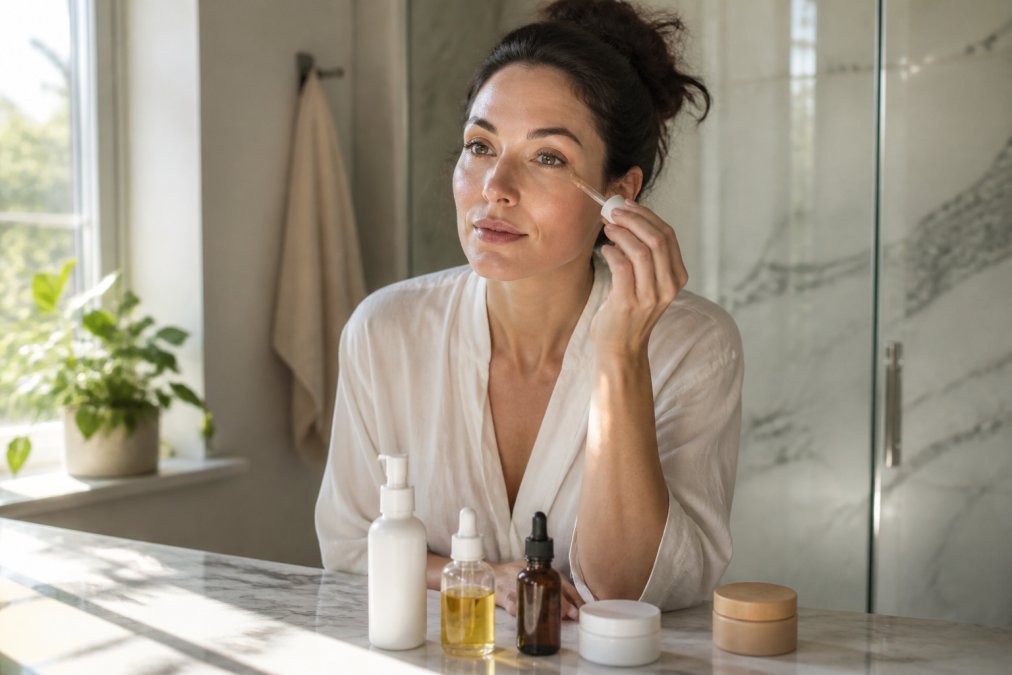
Morning Routine Steps
- Cleanse. A gentle rinse or low-foam cleanser removes overnight buildup without stripping your skin barrier. If your skin is dry or sensitive, plain lukewarm water is often enough in the morning, save the full cleanse for night.
- Treat. Apply one water-based serum, such as a hydrating or antioxidant formula, to damp skin. Damp skin absorbs lighter formulas more evenly and lets you use less product.
- Moisturize. Lock in hydration with a moisturizer matched to your skin type. Apply while skin is still slightly damp to trap that water in.
- Protect. Finish with broad-spectrum sunscreen every single morning. This is the one step you should never skip, even indoors near windows or on cloudy days.
Evening Routine Steps
- Cleanse. Remove sunscreen, makeup, and the day's grime. If you wore heavy sunscreen or makeup, a double cleanse, an oil-based cleanser first, then your regular one, removes it without scrubbing.
- Treat. This is when retinoids or exfoliating acids go, if you use them. Start at the lowest frequency you can tolerate, often twice a week, and build up.
- Moisturize. A slightly richer moisturizer at night supports overnight repair, when your skin's barrier is most receptive.
That's four steps in the morning and three at night. If you're wondering whether a toner or essence is mandatory, it isn't. They're optional add-ons, not core steps.
How to Keep It Simple and Affordable
A minimalist routine is inherently a budget-friendly one, and that's the point. You don't need a separate product for every concern. A single well-chosen moisturizer can hydrate, support the barrier, and carry soothing ingredients at once. A single sunscreen can protect and, if tinted, even out tone.
A few ways to keep costs down without cutting corners:
- Buy the essentials first, add treatments last. Cleanser, moisturizer, and sunscreen do the heavy lifting. A treatment is the fourth purchase, not the first.
- One treatment at a time. Buying three actives you haven't tested is how money gets wasted on products your skin rejects.
- Ignore the step count on the label. A product marketed as "step 4 of 10" works fine as your only serum.
- Refill and reuse. Choosing products in refillable or larger-format packaging cuts both cost per use and packaging waste over time.
Why Fewer Products Is Also the Greener Choice
Every extra bottle is another round of packaging, shipping, and eventual disposal.
Skincare Routine Order for Beginners
How Long to Wait Between Skincare Steps
How to Introduce New Products Safely
A few rules that save a lot of grief:
Why Consistency Matters More Than Product Count
Common Mistakes to Avoid
Watch for these:
Frequently Asked Questions
What is the simplest skincare routine?
A simple skincare routine has three core steps: cleanse, moisturize, and apply sunscreen in the morning. In the evening, cleanse and moisturize again. You can add a serum for specific concerns like dullness or fine lines, but it is not required for a basic routine. The goal is consistency, not product count. Most dermatologists agree that a minimalist approach with three to four products works better than a complicated ten-step system for most skin types.
How do I determine my skin type before starting a routine?
Wash your face with a gentle cleanser, pat dry, and wait 30 minutes without applying anything. Then check how your skin feels. If it feels tight and flaky, you have dry skin. If it is shiny all over, you have oily skin. If only your T-zone is shiny, you have combination skin. If it stings or turns red easily, you have sensitive skin. Knowing your skin type helps you pick a cleanser and moisturizer that match your needs instead of guessing.
In what order should I apply my skincare products?
Apply products from thinnest to thickest consistency. Start with cleanser, then toner or essence if you use one, then serum, then moisturizer, and finally sunscreen in the morning. This order lets lightweight formulas absorb first without being blocked by heavier creams. If you use a retinoid at night, apply it after your serum but before your moisturizer. Waiting 30 to 60 seconds between each step gives products time to settle and reduces the chance of pilling.
How long does it take to see results from a new skincare routine?
Most skincare ingredients need four to six weeks of consistent use before you notice visible changes. Hydration improvements may show up within a week, but texture, tone, and fine lines typically take eight to twelve weeks. Retinoids can take up to six months for full results. Take a photo each week in the same lighting so you can track subtle progress. If you see no change after three months of consistent use, adjust one product rather than overhauling everything at once.
Building a simple skincare routine is less about finding the perfect products and more about choosing a short lineup you'll use every day. Coast to Coast Glow makes that easier with dermatologist-approved, clinically proven formulas built on clean ingredients and intentional design, including our best-selling Bioactive Prebiotics Jelly Serum. Shop our exclusive collection today and give your skin the consistent, results-driven care it deserves.